
Tile Adhesive Prices and Grout Guide: Which One for Which Tile

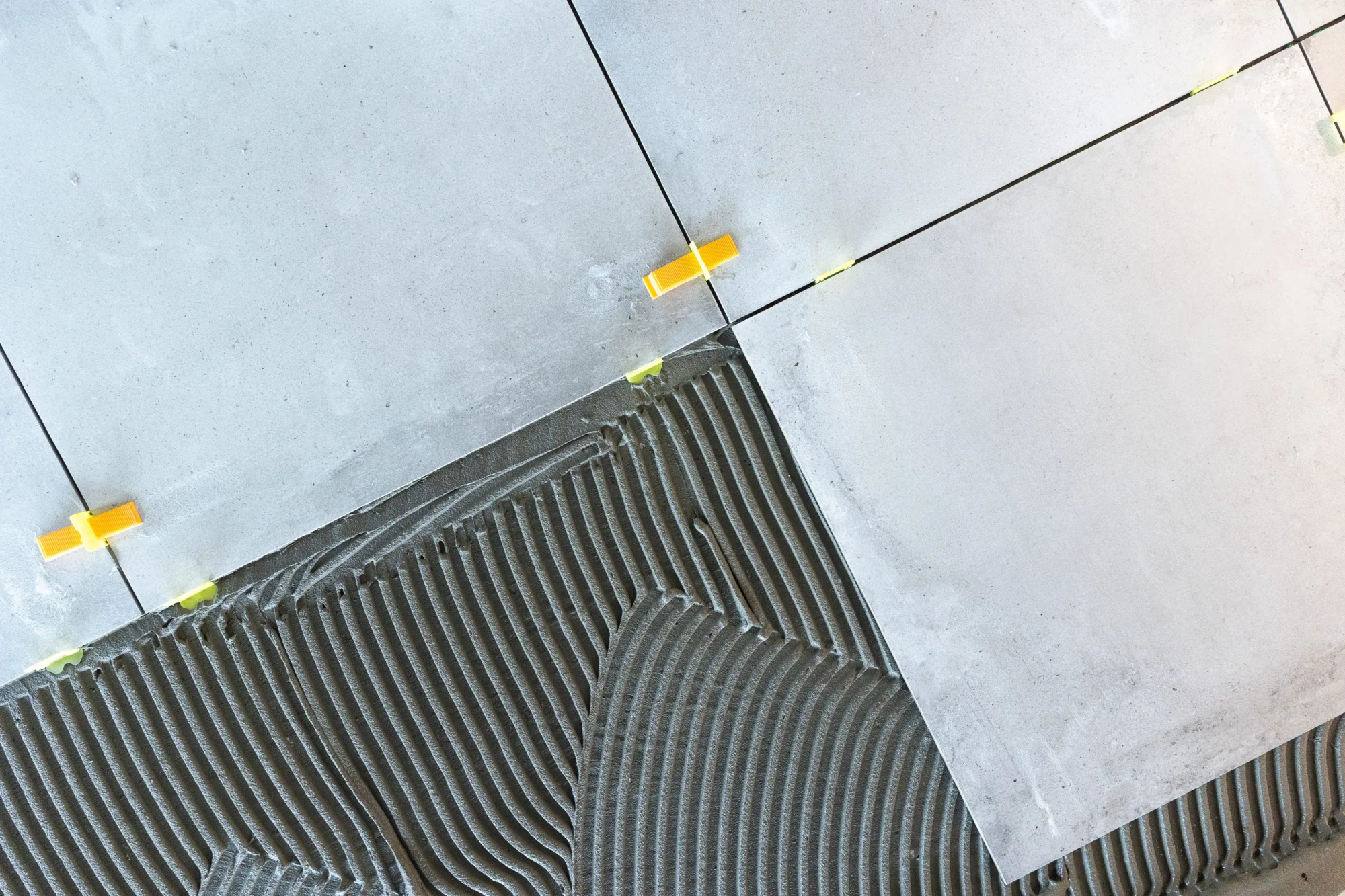
Tile adhesive is a factory blend of cement, graded sand and polymers, and a very different product to the cement sitting in the next bag. The polymers are the whole reason a tile stays stuck to a wall for twenty years instead of dropping off in the second summer.
Get the type wrong and nothing saves the job. Get it right and the price difference between the cheap bag and the correct bag is usually a few hundred rand across a whole house. Here’s what each type costs in 2026, what it’s for, and how much you actually need.
What tile adhesive is, and why cement won’t do
A bag of adhesive is cement, fine sand and a polymer package blended to a set ratio. The polymer content is what gives the bond strength, the flexibility and the water resistance. Straight cement and river sand makes a stiff, brittle bed that fails at the first bit of movement or moisture.
That failure mode is why tiling over a screed with a cement slurry went out of fashion. Adhesive grabs the back of the tile properly, takes up small variations in the substrate, and flexes just enough to survive a slab that moves a little.
Tile adhesive prices in 2026
Adhesive is sold in 20kg and 25kg bags, and the price tracks the polymer content. Standard is cheap. Improved is mid. Epoxy and high-flexibility adhesives are in a different bracket entirely. Typical 2026 ranges, excluding VAT:
| Adhesive type | Bag size | Typical price range | Used for |
|---|---|---|---|
| Standard cementitious (C1) | 20kg | R90 to R150 | Wall tiles, small ceramic, dry indoor areas |
| Improved cementitious (C2) | 20kg | R150 to R260 | Floors, porcelain, heavier tiles |
| High flexibility (C2 S1/S2) | 20kg | R250 to R420 | Large format, underfloor heating, timber substrates |
| Epoxy | 2 to 5kg kit | R450 to R900 | Commercial kitchens, pools, chemical exposure |
| Cementitious grout | 5kg | R80 to R180 | Standard jointing, floors and walls |
| Epoxy grout | 5kg kit | R450 to R850 | Wet rooms, stain resistance, narrow joints |
The ranges are indicative and they move with brand and with branch stock, so check the live price before you budget off this page. A cheap bag that fails and needs redoing costs more than the expensive bag you avoided.
Which adhesive for which tile
Match the adhesive to the tile, not to your budget.
- Ceramic wall tiles. Standard C1 cementitious is fine. Ceramic is porous and light, and a regular bag grabs it properly.
- Porcelain floor tiles. Improved C2. Porcelain barely absorbs water, so the bond has to come from the adhesive rather than from the tile soaking it in.
- Large format tiles, 600 x 600 and up. C2 with flexibility, and you need to back-butter. A big tile with only ribbed adhesive on the floor leaves voids, and voids crack.
- Tiles over a timber floor or underfloor heating. C2 S1 or S2. The substrate moves with heat and humidity, and a stiff adhesive cracks along the movement.
- Wet rooms. C2 for the bed and waterproofing membrane behind it. Adhesive alone is not your waterproofing layer.
- Pools. Epoxy, or a purpose-made pool adhesive. Chlorinated water gets into anything else.
If you’re not sure which grade your tile falls into, the tiling and flooring range lists the adhesives, grouts and trims we stock by tile type.
Coverage, so you buy the right number of bags
Coverage depends on the trowel notch, and the trowel notch depends on the tile size. Adhesive coverage per 20kg bag, roughly:
- 6mm notched trowel. 4 to 5 square metres. Suits tiles up to about 300 x 300.
- 8mm notched trowel. 3 to 4 square metres. The workhorse for standard floor tiles.
- 10mm notched trowel. 2 to 2.5 square metres. Large format, and anything with a deep back profile.
- Back-buttering added. Knock 30% off those figures. A 600 x 600 porcelain floor with back-buttering eats a bag every two square metres.
So a 40 square metre lounge floor in 600 x 600 porcelain is roughly 20 bags of C2, plus grout. That’s the order that catches people out. They budget for a bag every four square metres and then wonder why the second trip to the shop happened.
Grout is a separate decision
Grout fills the joint, and it’s not a cosmetic afterthought. Unsanded grout for joints under 3mm, sanded for wider joints, and epoxy where the floor sees food, chemicals or constant water.
Wide joints need more grout and they show dirt faster. Narrow joints need a careful mix and an unsanded product or the sand grains won’t fit. On a 3mm joint floor tile, grout at 5kg covers roughly 8 to 12 square metres depending on tile size and joint width. Small tiles mean more joint, which means more grout, which is one more reason large format tiles work out cheaper to finish.
Colour choice is worth thinking about too. Dark grout on a floor hides dirt and shows every scratch. Light grout shows every bit of dirt and makes a clean job look cleaner. There’s no right answer, but there is a wrong answer for a braai room.
The South African realities that break cheap installs
Two things on a Gauteng site kill tiling jobs that would have survived in a milder climate.
The first is the slab. New slabs move as they cure and as the Highveld clay underneath swells and shrinks with the rain. A stiff adhesive over a moving slab cracks along the joints. That’s the argument for C2 S1 as a default on any floor you’d rather not redo.
The second is load-shedding on the day. Mixing adhesive is fine by hand, but cutting large format porcelain with a wet saw isn’t. If there’s no power, the tiler is laying a floor with a manual cutter and a snapped edge. Schedule the cutting around the schedule, or get an inverter on site before the tiler arrives.
And keep the bags dry. Adhesive that takes on moisture in storage sets in the bag. A lumpy bag is a dead bag, no matter what it cost.
Buying adhesive without waste
Work out the tile size, pick the trowel notch, do the coverage arithmetic, then add 10% for waste and offcuts. That’s the whole method, and it beats buying a pallet of standard adhesive because it was cheaper per bag and then discovering you needed the flexible stuff anyway.
Our home and interior range covers adhesives, grouts and trims, and the full product range shows everything we stock. If you’re kitting out more than one property, our wholesale pricing is worth asking about before you order the first batch.
Not sure which bag suits your tile? Take a photo of the tile and the substrate to the counter at the Wynberg branch in Sandton, or send it through the contact page. It’s a two minute conversation that saves a re-tiling job. New to the site? Everything starts at the Build Africa SA home page.
Floor prep is the other half of the job, and it’s where most budgets leak. The paving and surface prep costs guide covers the prep and finishing costs that sit outside the tile and adhesive bill.
Frequently asked questions
How much does a bag of tile adhesive cost in South Africa?
A 20kg bag of standard cementitious adhesive runs roughly R90 to R150 in 2026. Improved C2 adhesive is about R150 to R260, and high flexibility C2 S1 or S2 around R250 to R420. Prices vary by brand and branch, and exclude VAT.
Can I use cement instead of tile adhesive?
It’s not worth it. Straight cement and sand makes a brittle bed with weak grip, and it fails as soon as the substrate moves or moisture gets in. Adhesive contains polymers that give the bond strength and flexibility that a cement mix can’t match.
How many square metres does a 20kg bag of tile adhesive cover?
It depends on the trowel notch. Roughly 4 to 5 square metres with a 6mm notch, 3 to 4 with an 8mm notch, and 2 to 2.5 with a 10mm notch. Back-buttering large format tiles cuts those figures by about 30%.
Which adhesive do I need for large format tiles?
Use an improved flexible adhesive such as C2 S1 or S2, and back-butter each tile. Large format tiles need full coverage to avoid voids underneath, and the substrate needs to be flat within a couple of millimetres over a two metre straight edge.
What grout should I use in a bathroom or shower?
A cementitious grout works in most wet areas as long as there’s a proper waterproofing membrane behind the tile. Epoxy grout resists staining and standing water better and is worth the extra cost in showers and commercial kitchens.
How long before I can grout after tiling?
Wait at least 24 hours after laying the tiles before grouting, and longer in cool or damp conditions. Walking on the floor too early is what breaks the bond at the tile edges, and that shows up as hollow-sounding tiles later.
About the Author
On this page
- What tile adhesive is, and why cement won’t do
- Tile adhesive prices in 2026
- Which adhesive for which tile
- Coverage, so you buy the right number of bags
- Grout is a separate decision
- The South African realities that break cheap installs
- Buying adhesive without waste
- Frequently asked questions
- About the Author