
Paving Prices Per Square Metre in South Africa (2026 Costs)

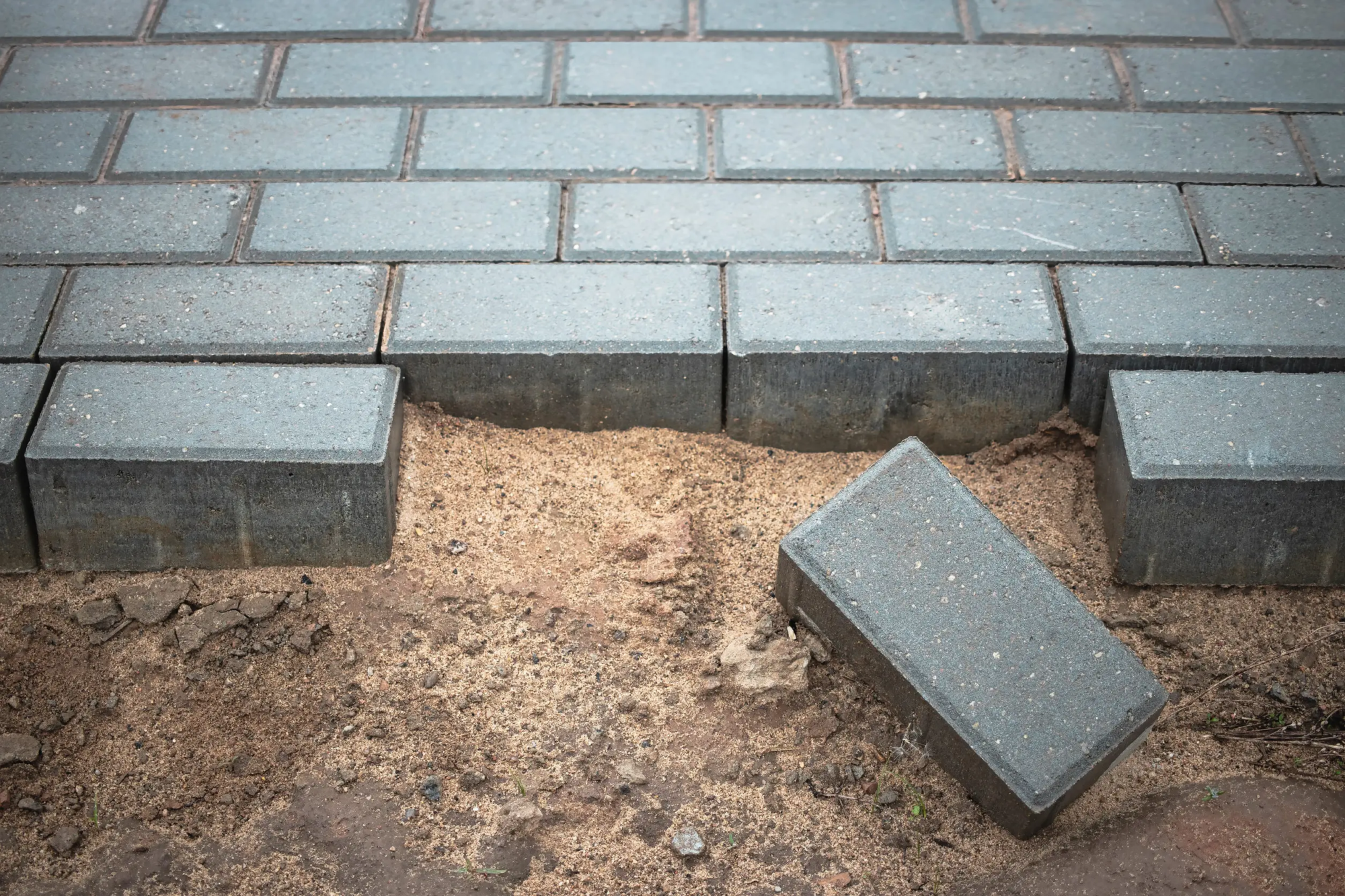
Paving quotes come in three shapes and they aren’t comparable. Supply only. Supply and lay. Supply, lay and excavate. The per square metre number means nothing until you know which one you’re looking at.
Here’s what paving costs per square metre in South Africa in 2026, what the labour and base layers add, and how to work out the quantities so the quote has something to check against.
Paving prices per square metre in 2026
The ranges below are typical 2026 retail for the paving itself, excluding VAT and excluding delivery and laying. Thickness, finish and laying pattern do most of the work.
| Paving type | Supply price per square metre | Where it suits |
|---|---|---|
| Concrete block paving, 50mm | R220 to R340 | Patios, paths, pedestrian areas |
| Concrete block paving, 60mm | R260 to R395 | Driveways and light vehicle traffic |
| Interlocking pavers, 80mm | R340 to R520 | Heavy driveways, truck access, slopes |
| Clay pavers | R350 to R620 | Character work, colour fast, older homes |
| Cobble and flagstone | R420 to R850 | Feature areas, garden paths, entrance detail |
Then add the laying. Labour for supply and lay typically lands between R90 and R180 per square metre, more where the access is tight or the pattern is complicated. Base preparation, excavation and disposal of spoil are priced separately again, and on a driveway that’s often the biggest single line on the quote.
Colour also shifts between production runs, so the pallet on the floor today is the one to price. Check the paving and hard landscaping section for what’s actually in stock before you build a budget around a swatch.
So a 60 square metre driveway in 60mm block paving, supplied and laid over a prepared base, usually works out somewhere between R28,000 and R48,000 all in. The spread is wide because the base preparation is what varies, not the paving.
What actually moves the price
- Thickness. 50mm for foot traffic, 60mm for cars, 80mm for anything heavier. Buying 50mm for a driveway is the most common false economy in paving, and the failure mode is pavers that rock and settle.
- Base preparation. A driveway over undisturbed ground needs far less excavation than one over soft fill or old flower beds. Bringing in and compacting a proper base course costs money and it’s the difference between paving that lasts a decade and paving that looks tired in two seasons.
- Sub-base depth. Roughly 100mm compacted for pedestrian areas, 150mm for driveways, more over clay. Highveld clay moves with the rain, and a thin base over clay is where the wavy driveway comes from.
- Pattern. Herringbone and basketweave patterns need more cutting, and cutting wastes pavers. A running bond laid straight needs fewer cuts and fewer broken pavers.
- Edge restraints. A concrete or kerb edge holds the paving from spreading, and it isn’t optional on a driveway. Quotes that skip it are cheaper and won’t stay flat.
- Access. Paving a back garden through a narrow side passage means barrowing everything in by hand. That’s labour, and it shows on the per square metre rate.
Coverage and quantity, so the quote adds up
Paving is sold by the square metre, and the number of pavers per square metre depends on the format.
- 200 x 100mm pavers. 50 per square metre. The standard interlock format.
- 220 x 110mm pavers. Roughly 41 per square metre.
- 600 x 300mm slabs. About 5.5 per square metre, allowing for joints.
Add 5% for cuts on a simple rectangular area, and 10% where there are curves, corners or a diagonal pattern. A 60 square metre driveway in 200 x 100mm pavers needs around 3,150 pavers, so order 3,300.
Under the pavers goes the bedding sand. A 30mm bedding layer needs about 0.033 cubic metres per square metre, so 60 square metres takes two cubes. Joint sand fills the gaps afterwards and works out at roughly one 25kg bag per three square metres, more on a wide-joint cobble.
The base course underneath is the volume that surprises people. A 150mm compacted base over 60 square metres is nine cubic metres of material loose, and compaction takes roughly 20% back out. That’s the number to get right, because a shortfall means a second load delivery.
Our material calculator runs these quantities for you if you’d rather not do it longhand.
The South African ground under the paving
Two site conditions cause most of the paving complaints in Gauteng.
The first is clay. Highveld clay swells when it gets wet and shrinks when it dries, and it moves anything sitting on top of it. A driveway needs a properly compacted base coarse enough to spread the load, and drainage so water doesn’t sit under the paving. Skip that and the driveway waves within two summers.
The second is drainage. Paving that falls the wrong way sends water into the garage, not away from it. A minimum fall of about 1.5% away from the building is the usual rule, and it’s set at the base, not at the pavers. By the time you’re laying, the fall is locked in.
Load-shedding touches paving work in one place: cutting. A petrol cut-off saw doesn’t care about the grid, but a tile saw and an angle grinder do. If the layout needs a lot of cutting, plan the cutting around the schedule or arrange a generator, because a crew standing around with no power still gets paid.
DIY or a contractor
Paving is one of the more achievable DIY jobs, with one caveat. The paving part is straightforward. The base is the part that decides whether it lasts.
If you’re laying a small patio or a garden path, and the ground underneath is already firm, doing it yourself is realistic and saves a real chunk of money. If you’re paving a driveway over clay, or there’s existing paving and rubble to dig out, or the area is sloping, get someone who does it weekly. The labour cost is smaller than the cost of redoing the base.
Either way, buy the pavers, bedding sand and joint sand as one order. Paving added later rarely matches, because colours shift between production runs, and a driveway with three slightly different greys in it looks like a patchwork.
Getting the quote to mean something
Ask every paving quote for four separate lines: excavation and spoil removal, base course material and compaction, bedding and pavers, and labour. When the numbers are broken out, a cheap quote usually turns out to be a thin base, and the comparison becomes honest.
Our building and construction range carries pavers, bedding sand, joint sand and the kerb material for edge restraints. Pallets are the sensible buying unit on anything over 30 square metres, and our full product range shows what’s in stock at the branches.
If you’re buying for a commercial job or a sectional title complex, ask about our wholesale pricing before you place the order. Want the quantities checked against your site plan? Bring the plan to the Wynberg branch in Sandton or send it through the contact page. New to Build Africa SA? Everything starts at our home page.
Sand is the quiet cost under every paving job, and buying the wrong grade wastes both money and cement. Our building sand versus plaster sand comparison explains which goes into a bedding layer and which doesn’t.
Frequently asked questions
How much does paving cost per square metre in South Africa?
In 2026, 60mm concrete block paving costs roughly R260 to R395 per square metre supply only. Supply and lay adds about R90 to R180 per square metre, and base preparation and spoil removal are priced separately, so an all-in driveway works out between R470 and R800 per square metre.
Is paving cheaper than concrete?
Paving and concrete land in a similar range once the base is proper, and paving has the advantage of being liftable for repairs and services. Paving costs more upfront on a heavy driveway, and it looks better for longer than a cracked slab.
What thickness paving do I need for a driveway?
60mm block paving is the standard for cars, and 80mm interlocking for anything heavier or on a slope. 50mm is for foot traffic only, and using it on a driveway is the most common paving mistake.
How much sand do I need under paving?
A 30mm bedding layer uses about 0.033 cubic metres of sand per square metre, so a 60 square metre area takes roughly two cubes. The compacted base course underneath is a separate, much larger volume, around 150mm compacted for a driveway.
Can I lay paving myself?
Yes, for patios and paths over firm ground. The laying is straightforward. Base preparation is the part that decides how long it lasts, so get a contractor if the ground is clay, the area is sloping, or there’s old paving to remove.
How many pavers are in a square metre?
Standard 200 x 100mm pavers are 50 per square metre. 220 x 110mm pavers work out at about 41 per square metre, and 600 x 300mm slabs at roughly 5.5. Add 5% for cuts, and 10% where there are curves or a diagonal pattern.