
Building Sand Price in South Africa: Per Cube, Per Load and What Changes It

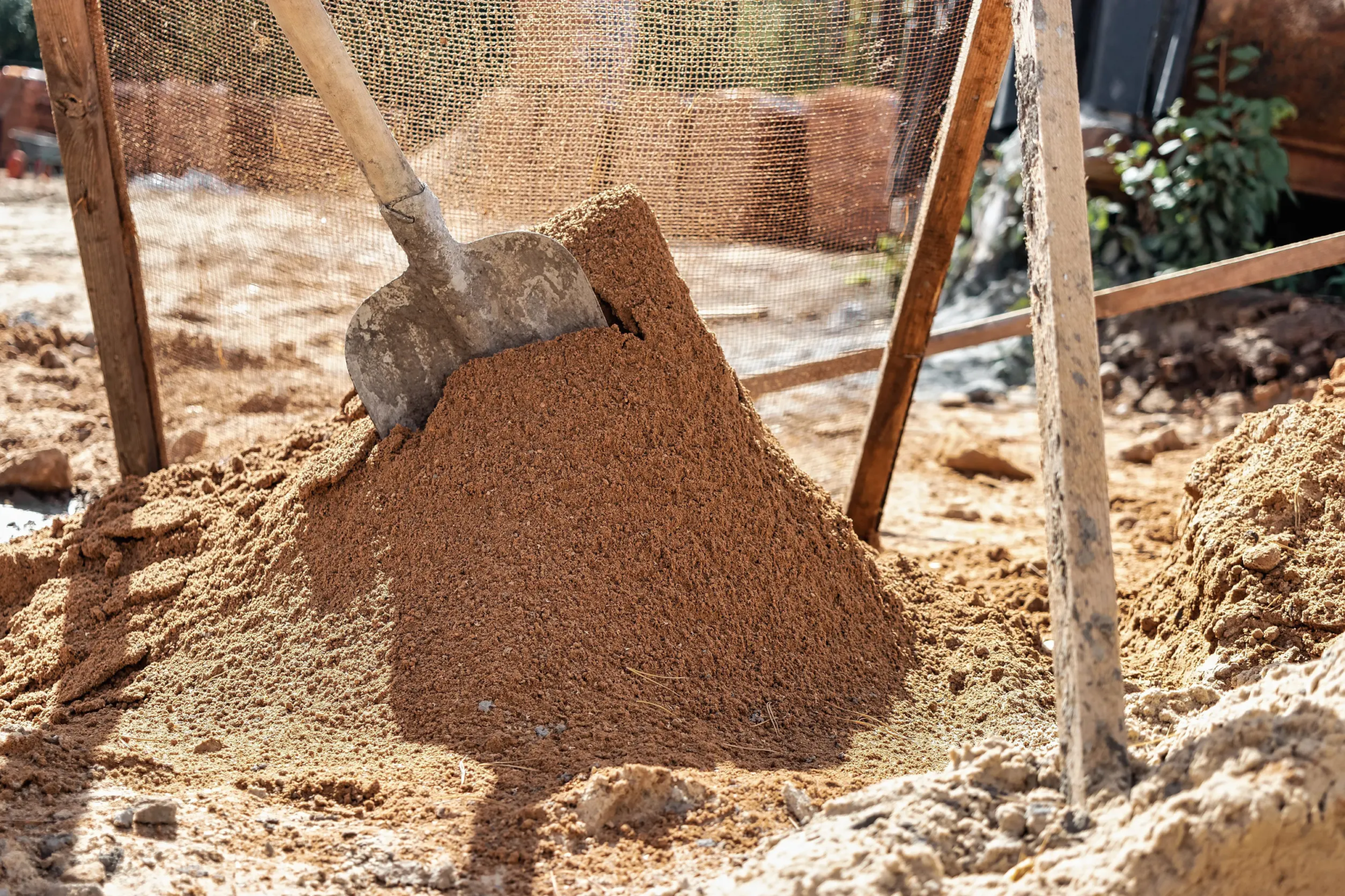
Ordering plaster sand for a brick force, and building sand for a slab, is a mistake that costs you twice. Once for the wrong load. And again for the right one, by which point the bricklayers have been standing around for a morning.
The two materials aren’t interchangeable. They don’t come out of the same pit, they behave differently under a trowel, and in 2026 they aren’t priced the same either. Here’s what each one does, what it costs per cube, and how to size the load before you phone the yard.
Building sand and plaster sand aren’t the same product
Building sand is the coarse one. The grains are angular and slightly bigger, which is what you want in a mortar or a concrete mix, because the aggregate has to lock together and carry load. It’s also the sand that goes into bedding layers under paving.
Plaster sand is finer and cleaner. Grains are smaller and more evenly graded, and it gets washed or screened to take out the silt and the clay. That matters because plaster is a finish coat. Coarse sand in a plaster mix gives you a gritty wall that fights you all the way up the trowel, and it looks wrong under paint no matter how good the painter is.
So the shorthand is simple. Building sand for brick force, bedding and concrete. Plaster sand for skim coats, screeds, and anything the client will actually look at. Buy the wrong one and you’ll know inside an hour.
What building sand costs in 2026
Sand is sold by volume, not by weight, so the unit is the cubic metre. Everyone on site calls it a cube. The ranges below are typical Gauteng retail for 2026. They move with the quarry, the delivery distance and the size of the load, so treat them as a budget starting point rather than a quoted price.
| Material | Typical price range | What it’s used for |
|---|---|---|
| Building sand, loose, per cube | R380 to R520 | Brick force, mortar, bedding under paving |
| Plaster sand, loose, per cube | R420 to R580 | Skim plaster, screeds, fine finishing work |
| Building sand, 6 cube delivered load | R2,700 to R3,400 | A full tipper tipped on site |
| Plaster sand, 6 cube delivered load | R2,900 to R3,600 | A full tipper tipped on site |
| Bagged builder’s sand, 25kg | R60 to R95 | Small repairs where a load is silly |
Those ranges exclude VAT. Trade accounts are usually quoted excluding VAT, and counter prices include it, so compare like with like before deciding one yard is cheaper than another. On a delivered load the VAT difference alone is a couple of hundred rand.
The figure that catches people out is the delivered price. Sand is heavy. A six cube load needs a tipper truck and half a morning, and that transport cost sits on top of the material whether you order three cubes or six. Which is exactly why three cubes delivered costs nearly as much in transport as six does.
What moves the price per cube
- Distance from the pit. Sand travels. The further the quarry is from your site, the more of your rand goes into diesel. Buyers in Randburg and Midrand pay less on transport than someone out past Bronkhorstspruit, for no reason other than kilometres.
- Load size. A full tipper moves sand at the lowest cost per cube. Half loads and bakkie loads are convenient, and you pay for the convenience.
- Season. Demand spikes in dry weather when every builder is trying to make up a schedule. That isn’t the week to negotiate.
- Screened versus unscreened. Washed and screened plaster sand carries a premium because somebody did the work of taking the rubbish out. Pit sand straight off the ground is cheaper, and it needs more cement to make it behave.
- Site access. If the truck can’t reach the spot and every cube gets wheelbarrowed down a passage, that’s labour, and most yards price it separately.
How much sand a job actually needs
Guessing here is how people end up with two leftover cubes sitting under a tarpaulin until the plastic rots.
For a mortar mix, sand dominates the volume. A general 1:5 mix is roughly five parts sand to one part cement by volume, so the sand quantity lands close to the mortar volume itself. Tighten the mix to 1:4 and the sand share drops a little while the cement bill climbs.
Plaster behaves differently. A 10mm coat covers about 10 square metres per cubic metre of plaster before waste. Add 10% for a rough wall, and 15% where the surface is uneven or the plasterer is chasing a bad brick line. If you’re pricing a whole house, run the figures through our brick and material calculator first. It costs nothing and it stops you ordering on instinct.
Bedding sand under paving is a third case again. A 30mm bedding layer over 100 square metres is three cubic metres loose, and compaction takes about a fifth of that back out. Order the loose figure, not the compacted one.
Ordering sand to a Gauteng site
Delivery is the part of the order people underspecify. Tell the yard where the truck can actually stop, whether there’s a gate the driver has to squeeze through, and whether the load gets tipped onto a tarpaulin or into a yard. Every one of those answers changes what the run costs and how long it takes.
Our Wynberg store in Sandton runs deliveries across Alexandra, Kramerville, Bramley, Woodmead and the northern suburbs. Inside that ring, a delivered load usually beats collecting with a bakkie, because a bakkie can’t carry enough to make the trip pay for itself. Outside it, ask for the transport figure before you compare anyone else’s quote.
Cash buyers pay the counter price. Account holders buy on terms and typically get a better rate at volume, which is where our wholesale pricing matters. If you’re a contractor running more than a couple of loads a month, that conversation is worth having before your next order.
Checking sand quality before it gets dumped
Bad sand ruins good cement, so it’s worth two minutes at the back of the truck.
- Look at the colour. Plaster sand should be pale and consistent. Dark or streaky sand usually means organic matter or clay.
- Squeeze a handful. Damp sand should hold a shape without oozing water. If it cakes into a lump that won’t break, there’s too much clay in it.
- Run the bottle test. Half a bottle of sand, top up with water, shake it, let it settle. Silt and clay sit in a layer above the sand. If that layer is thicker than about 10%, the sand needs extra cement to compensate, or it needs to go back on the truck.
Nobody enjoys sending a load back. And nobody enjoys re-plastering a wall either, so pick the smaller of the two problems.
What to order, and how much of it
Laying brick or pouring a slab means building sand, in a load big enough that the delivery charge makes sense. Anything that will be seen or skimmed means plaster sand, ordered separately and kept on its own pile so the crew doesn’t grab a shovel of the wrong one. Our building and construction supplies cover sand, cement and aggregate, including the bagged options for jobs too small to justify a truck.
Leftover sand sits there costing money. An uncovered pile drinks water, grows weeds, and quietly disappears into the garden over a season. Ordering to within a cube of the real number is the difference between a tidy site and something you’re still looking at next winter.
Want to see what’s in stock before you commit? The full building materials category lists current lines, and the complete product range shows everything the branches carry. If you’d rather talk volumes through with someone who knows the delivery routes, our contact page gets you to the right branch. New here? Start at the Build Africa SA home page.
And if the job is a plaster job rather than a brick job, the numbers work differently. Our plaster sand coverage guide runs through the per square metre figures, which is where most of the over-ordering comes from.
Frequently asked questions
How much does building sand cost per cube in South Africa?
Typical 2026 Gauteng retail sits between R380 and R520 per cubic metre for loose building sand, excluding VAT. The price moves with the quarry, the delivery distance and the load size, so a delivered six cube load is usually quoted as a single figure rather than per cube.
What’s the difference between building sand and plaster sand?
Building sand is coarser with angular grains, which suits mortar, brick force, concrete and bedding. Plaster sand is finer and washed or screened to remove silt and clay, which suits skim plaster and screeds. Swapping them gives you weak mortar or a gritty, unworkable plaster finish.
Can I use building sand for plaster?
You can, and you’ll regret it. Coarse sand makes plaster hard to trowel and leaves a grainy surface that shows through paint. The cement cost saving is small and the finishing cost is not.
How much sand does a 1:5 mortar mix need?
Sand makes up roughly five sixths of the volume in a 1:5 mix, so the sand quantity lands close to the mortar volume itself. Add around 10% for waste, and more if the site is messy or the load gets wheelbarrowed a distance.
Is it cheaper to collect sand or have it delivered?
For small quantities inside the delivery ring, collecting in a bakkie is often cheaper. Once you need a full tipper load, delivery wins on cost per cube even with the transport charge. Work out the landed cost both ways before deciding.
Do sand prices include VAT?
Counter prices normally include VAT and trade account quotes normally exclude it. Standard VAT is 15%, so compare landed cost including VAT on both quotes or you’ll pick the wrong supplier.