
Plaster Sand Price and Coverage: How Much You Actually Need

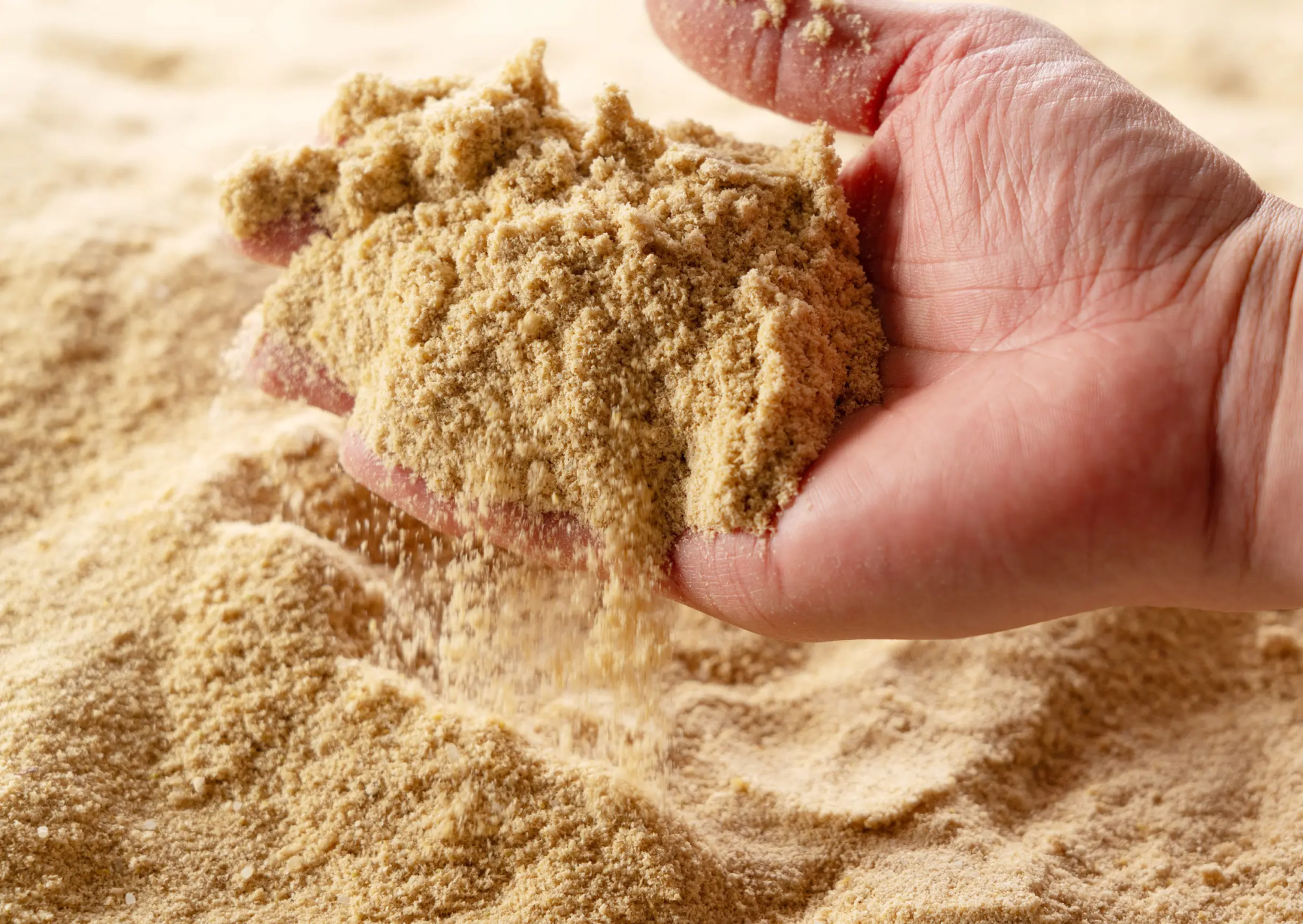
Plaster sand is the cheap part of a plaster job and the part most likely to be got wrong. Order the wrong grade, or too little of it, and the trowel stops while you go back to the yard.
The money in a plaster job sits in the quantity and the mix, not in the sand. Here’s the 2026 price per cube, how far a load actually goes, and how to size the order from the wall area.
What plaster sand costs in 2026
Sand sells by volume, and the trade unit is the cubic metre. What everyone on site calls a cube. The ranges below are typical Gauteng retail in 2026 and they move with the quarry, the screening and the delivery distance, so use them to build a budget rather than to fix a price.
| Format | Typical price range | Best for |
|---|---|---|
| Plaster sand, loose, per cube | R420 to R580 | Whole rooms, whole houses |
| Plaster sand, 6 cube delivered | R2,900 to R3,600 | A full tipper load on site |
| Plaster sand, 3 cube delivered | R1,800 to R2,400 | Smaller additions and alterations |
| Bagged plaster sand, 25kg | R65 to R100 | Patching, chasing and repairs |
| Screed sand, screened | R450 to R620 | Floor screeds and levelling |
Those figures exclude VAT, and delivered prices depend on how far the truck travels and how far the barrow has to push the load. Expect roughly R150 to R250 per cube of that delivered figure to be transport, which is why a half load is poor value.
Sand is only part of the order. The cement and screed that go with it sit in the same building materials category, so a single delivery can cover the whole plaster job.
What makes plaster sand different
Plaster sand is fine, washed and screened. The screening takes out the oversize grit and the washing takes out the silt and clay. Silt is the thing that matters most, because a silty sand needs more cement to reach the same strength and it shrinks more as it cures.
You can test it in a bottle. Half fill with sand, top up with water, shake it and let it settle. The layer that forms above the sand is silt and clay. Under about 10% is fine. Over 15% and you’re buying cement to make up for dirty sand, which means the cheap load isn’t cheap.
The other quality signal is colour and consistency. Plaster sand should be pale and even. Dark patches usually mean organic matter, and organic matter prevents the mix from setting properly.
How far a load of plaster sand goes
Coverage depends on the thickness of the coat, and that depends on how straight the wall is.
- A 10mm coat covers roughly 10 square metres per cubic metre of plaster. That’s the theoretical figure for a flat wall.
- A 15mm coat drops to about 6.5 square metres per cube. Common where the brickwork is rough or the plasterer has to build out to a line.
- A 20mm coat is closer to 5 square metres per cube. That happens on old walls being re-plastered over an uneven surface.
Then add waste. 10% on a clean new wall. 15% to 20% on a renovation where the substrate is all over the place.
Put together, a 120 square metre house at 12mm average coat is about 4.6 cubes of plaster sand before waste, call it five once you’ve allowed for the splash and the odd deep chase. If you’re also screeding floors at 40mm, a 100 square metre floor adds another 4.5 cubes. That’s why a full house plaster job frequently runs to two tipper loads, not one.
For the brick and block side of the same project, run the dimensions through our brick and material calculator and you’ll get the quantities before you order rather than after.
How much cement goes with a cube of plaster sand
Plaster mixes are quoted by volume, and the common ratios are 1:3 for a strong finish, 1:4 for general external work, and 1:5 for interior plaster where the surface won’t take a beating.
A 1:4 plaster mix takes roughly seven 50kg bags of cement per cube of sand. That’s the figure most Gauteng plasterers work to, and it’s the one to budget with. Go to 1:3 and the cement bill climbs to about nine bags per cube. Loosen it to 1:5 and you’re down to around five and a half bags, along with a weaker surface that scuffs in a hallway.
Which is why the sand price is only part of the story. On a 500 square metre plaster job, the cement costs more than the sand does, and the ratio you pick moves that number by thousands of rand.
Ordering plaster sand to a Gauteng site
Tell the yard where the truck can tip. A 6 cube load needs space, and it can’t be tipped 15 metres from the wall if every barrow load takes four minutes. On a small suburban plot, a 3 cube load tipped close to the work is sometimes faster than a 6 cube load tipped on the verge.
Our Wynberg branch in Sandton delivers plaster sand across Alexandra, Bramley, Kramerville, Woodmead and the northern suburbs. If you’re inside that ring and the load is small, collecting in a trailer can beat delivery. Inside the ring with a full house to plaster, delivery wins every time.
Keep plaster sand separate from building sand on site. Two piles, two labels, and a word with the crew. Mixing them by accident gives you coarse sand in a finish coat, and you’ll see it the moment the sun hits the wall.
The South African realities that cost money
Highveld heat cures plaster fast, and fast curing is where cracks start. A wall that dries in the full afternoon sun with a north wind on it will craze. Wet the wall down before plastering and keep it damp for a day or two afterwards. That step costs nothing and saves a call-back.
Load-shedding doesn’t stop plastering, which is one of the few building trades that survives a dark afternoon. Sand and cement mix by hand and the trowel doesn’t need power. But if the schedule says the wall must be plastered before the electrician arrives, check both schedules line up, because a plastered chase costs more to open again than the wiring would have.
And don’t plaster over a wall that’s still wet from rain. Trapped moisture comes out through the plaster as a damp patch, and the client will ring you about it in a month.
Buying plaster sand without waste
Work out the wall area, pick a coat thickness, divide, add waste, then round up to the load size the yard actually delivers. That’s the whole method. Most over-orders come from skipping the coat thickness step and ordering off a guess at the wall area.
Our building and construction supplies cover plaster sand, cement, screed and the bagged options for small jobs, and the full product range shows everything the branches carry. If you’re pricing a plaster or screed package, speak to us through the contact page and we’ll work the quantities with you. New here? Start at the Build Africa SA home page.
Still deciding which sand goes where on the site? Our building sand versus plaster sand breakdown covers the grade differences, the prices and the mix ratios side by side.
One last thing. Plaster sand that’s been rained on and left uncovered for a month will have silt and rubbish washed into the top layer. Keep it sheeted and keep the loaded end of the pile clean, or the last two cubes of the load will be the worst two cubes.
Frequently asked questions
How much does plaster sand cost per cube in South Africa?
Typical 2026 Gauteng retail is R420 to R580 per cubic metre loose, excluding VAT. A delivered 6 cube load runs about R2,900 to R3,600 depending on distance, and bagged 25kg plaster sand is roughly R65 to R100 for small repairs.
How much plaster does a cube of sand cover?
About 10 square metres at a 10mm coat, around 6.5 square metres at 15mm, and about 5 square metres at 20mm. Add 10% for waste on a new wall and up to 20% on a renovation with uneven brickwork.
How many bags of cement do I need for a cube of plaster sand?
A 1:4 plaster mix takes roughly seven 50kg bags of cement per cubic metre of sand. A 1:3 mix needs about nine bags, and a 1:5 mix needs about five and a half. The ratio affects the cement bill more than the sand bill.
Can I use building sand for plastering?
You can, but the finish will be gritty and hard to trowel, and it shows through paint. Plaster sand is finer and screened to remove grit, which is what makes a smooth finish possible.
How thick should plaster be on a wall?
10mm to 15mm is the normal range for plaster over brick or block. Thicker coats are used to correct uneven walls but they shrink more and crack more easily, so they need to go on in layers rather than in one pass.
Why does new plaster crack?
Mostly because it dried too fast. Highveld sun and wind pull moisture out of the mix before it has cured, and the surface crazes. Wet the wall before plastering and keep it damp afterwards, and most of that cracking disappears.
About the Author
On this page
- What plaster sand costs in 2026
- What makes plaster sand different
- How far a load of plaster sand goes
- How much cement goes with a cube of plaster sand
- Ordering plaster sand to a Gauteng site
- The South African realities that cost money
- Buying plaster sand without waste
- Frequently asked questions
- About the Author