
Maxi Bricks vs Stock Bricks: Which to Buy, and What They Really Cost

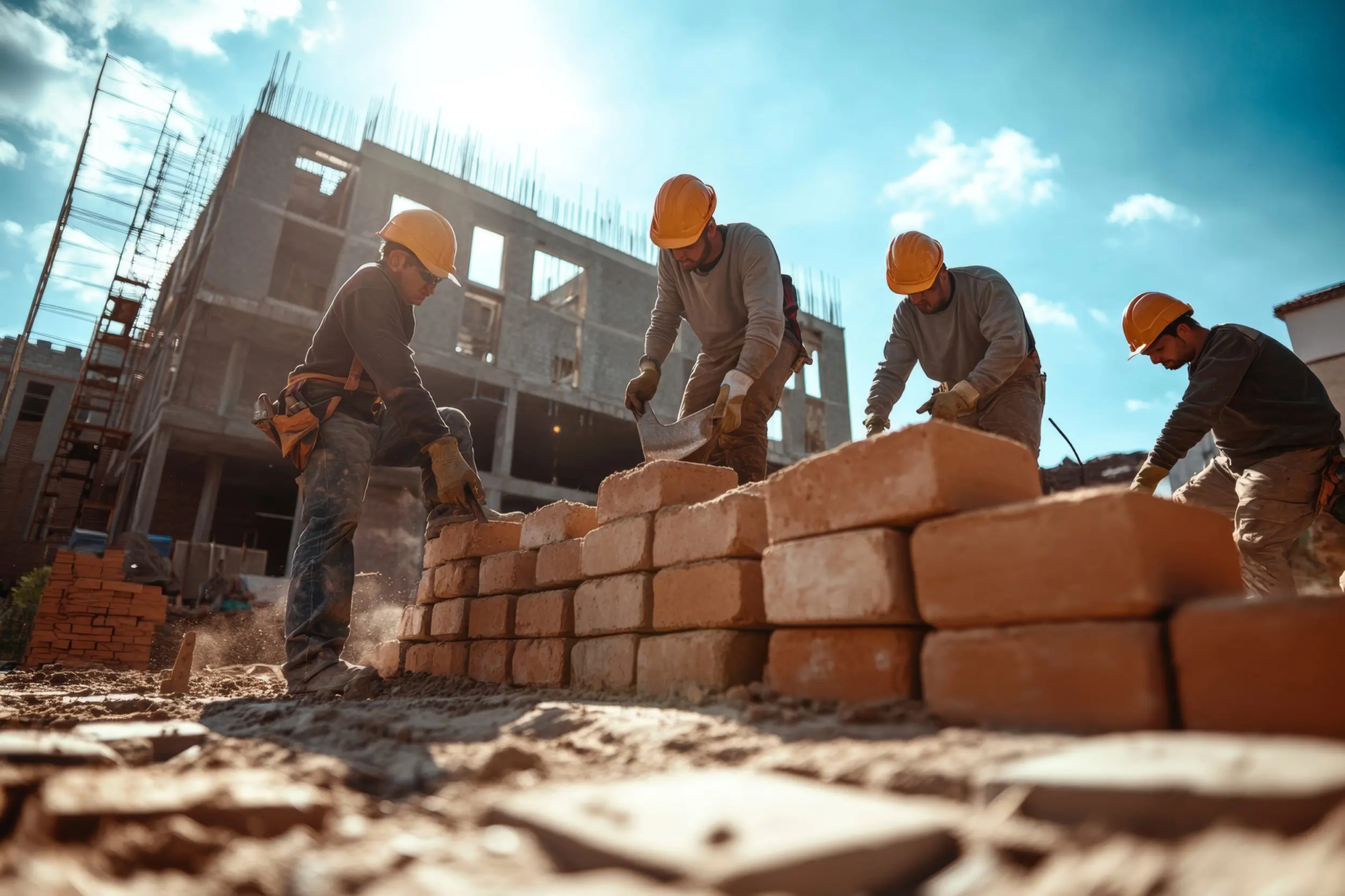
A maxi brick costs more than twice as much as a stock brick. It also covers almost twice the wall. Which one is cheaper depends on something most price comparisons leave out entirely: how many units you have to lay.
Here is the actual arithmetic, using current prices.
What bricks cost right now
| Brick type | Price each | Typical use |
|---|---|---|
| Cement stock bricks | R2.10 | General walls, plastered and painted |
| Clay stock / plaster bricks | R2.39 | General walls with clay characteristics |
| Cement maxi bricks | R4.69 | Faster build, fewer units, fewer joints |
| Face bricks – Nguni satin | R4.79 | Unplastered feature walls and facades |
| Face bricks – Mosaic satin | R4.89 | Unplastered feature walls and facades |
Prices are per brick, and the per-brick view is exactly where the comparison goes wrong.
The number that actually matters: cost per square metre
A stock brick and a maxi brick are different sizes, so a thousand of each does not build the same amount of wall. Working in bricks per square metre of wall:
- A stock brick wall takes roughly 55 bricks per square metre
- A maxi brick wall takes roughly 34 bricks per square metre
Applying current prices, that works out to approximately R115 per square metre in brick for stock, against roughly R159 per square metre for maxi. So the maxi brick is more expensive in material terms, by about a third.
That is the part most people get right, and then stop. The next part is where the argument actually gets decided.
Why material cost is not the whole story
A brick wall is not just bricks. Every brick brings a mortar joint with it, and every joint costs mortar and labour. Fewer, larger units mean:
- Fewer units to handle and lay. Laying 34 bricks to build a square metre is meaningfully quicker than laying 55, and bricklaying labour is charged per brick or per day, not per square metre covered.
- Less mortar. Fewer joints means less cement and sand consumed, which reduces the material spend below the brick line.
- Faster wall progress. On a project with a programme, the wall goes up faster, which matters if other trades are waiting on it.
Add that up and the maxi brick’s material premium is partly or largely recovered in labour and mortar – but only if your bricklayer is being paid per brick or per hour rather than per square metre of wall. That distinction is what decides the answer for your job.
When each one wins
| Scenario | Better choice | Reason |
|---|---|---|
| Plastered and painted boundary or internal wall | Maxi | Labour and joint savings outweigh the material premium |
| Tight material budget, labour in-house | Stock | Lowest cost per unit and per square metre of material |
| Face brick, exposed permanently | Face brick | Appearance is the requirement; stock and maxi are not substitutes |
| Small repair or extension matching existing | Match existing | Matching the wall you already have beats optimising |
| Clay-specific requirements | Clay stock | Different material properties, not interchangeable |
The costs nobody budgets for
Beyond the bricks themselves, a wall build carries:
- Mortar – cement and building sand, plus the labour to mix it
- Reinforcement – brick force or mesh at specified courses, plus wall ties where relevant
- Foundations and damp course – often the largest single cost and nothing to do with the brick choice
- Delivery – charged per trip. A full load delivered is a very different cost per brick from three pallets on three trips
- Wastage and breakage – order a realistic allowance, not a hopeful one
Order the whole wall in one delivery where you can. It is cheaper per brick, and it avoids the situation where the wall stops for two days waiting on a second load.
Buying bricks in the Sandton area
Our bricks are stocked at Pretoria Main Road in Wynberg, which keeps delivery to Alexandra, Kramerville, Bramley and Woodmead short and cheap. For a large wall, ask us to quote the whole delivery rather than collecting in stages.
Current brick prices and the full range are on the category page: see our live brick prices and available types.
If you tell us the wall dimensions, we can work out the brick quantity and the delivery in one go, which is a far safer way to budget than estimating per brick and hoping.
Ordering the right quantity
Brick quantities are calculated from wall area, not from the plan’s impression of the wall area. The reliable sequence is:
- Calculate the net wall area – length times height, minus openings for doors and windows.
- Multiply by bricks per square metre for the brick type (roughly 55 for stock, 34 for maxi).
- Adjust for wall thickness. A half-brick wall and a one-brick wall use very different quantities for the same face area.
- Add a wastage allowance of around 5% for a straightforward wall, more where there is heavy cutting.
- Round up to a pallet or load quantity where the price improves – and check the delivery trip count at the same time.
Ordering short by 200 bricks means a second delivery, which is where small mistakes become expensive ones.
Brick strength and when it actually matters
Bricks are supplied in strength classes – commonly 7MPa and 14MPa in the cement brick range. The instinct is to buy the strongest available, and it is usually the wrong instinct:
- General single-storey walls, boundary walls and internal walls rarely need the higher class. The wall’s performance depends more on foundations, reinforcement and pier spacing than on the brick’s compressive strength.
- Higher strength matters where the wall carries real load, where spans between supports are long, or where the design specifies it for a reason.
- Appearance is separate from strength. Face bricks are chosen for how they look unplastered; that has nothing to do with their load class.
If a structural engineer has specified a class, buy to specification. If nobody has, do not pay a premium for strength the wall does not use – spend it on the foundation instead.
Frequently asked questions
Is a maxi brick cheaper than a stock brick?
Not in material cost. A maxi brick currently costs R4.69 against R2.10 for a cement stock brick, and because it covers a larger area you use roughly 34 per square metre instead of 55. That works out to about R159 per square metre against R115. The saving comes from fewer units to lay and fewer mortar joints, which reduces labour and mortar cost.
How many bricks do I need per square metre?
Roughly 55 stock bricks or 34 maxi bricks per square metre of wall. Always add a wastage allowance and confirm quantities for your wall thickness and bond pattern with your supplier before ordering.
Are maxi bricks strong enough for boundary walls?
Yes, provided the wall is designed correctly – foundations, reinforcement and pier spacing matter more for boundary wall performance than the brick type. Matching the specification to the wall design is the important part.
Can I mix brick types in one wall?
You can, but there is rarely a good reason to. Mixing sizes complicates coursing and reduces the labour advantage that justifies the larger unit in the first place.